How to Choose the Right Custom Packaging for Your Online Orders
For an online business, the box is often the only physical thing a customer receives from you before they open the product. It has to protect what’s inside, keep shipping costs sensible and look like it came from your brand. Get it right and it quietly improves your margins and your reviews. Get it wrong and you pay for it in damages, returns and forgettable first impressions. Here’s how to choose well.
Step 1: Start with protection
Before thinking about design, think about the journey. Parcels get stacked, dropped, squeezed and shaken. Ask yourself:
- How fragile is the product?
- How heavy is it?
- Does it have corners or parts that could puncture the box?
- Will it travel a long distance or go through several handling stages?
Corrugated board comes in different strengths, and the choice affects both protection and cost. Single-wall board suits lighter products, while heavier or more fragile items may need stronger constructions. A good packaging supplier will recommend a board grade based on your product, not just sell you the biggest box.
Step 2: Get the size right
Sizing is one of the biggest hidden costs in e-commerce. Oversized boxes use more material, need more void fill, and take up more space in the warehouse and on the van. Many carriers also price parcels by size as well as weight, so a box that’s too large can increase postage on every order. A box that’s too small, on the other hand, risks crushed products and bulging corners.
Measure the product and any inserts, then choose internal dimensions that fit snugly with room for protection. If you sell several products, consider whether a small range of standard sizes could cover most orders. It’s usually cheaper than a different box for every item.
Step 3: Choose the right style
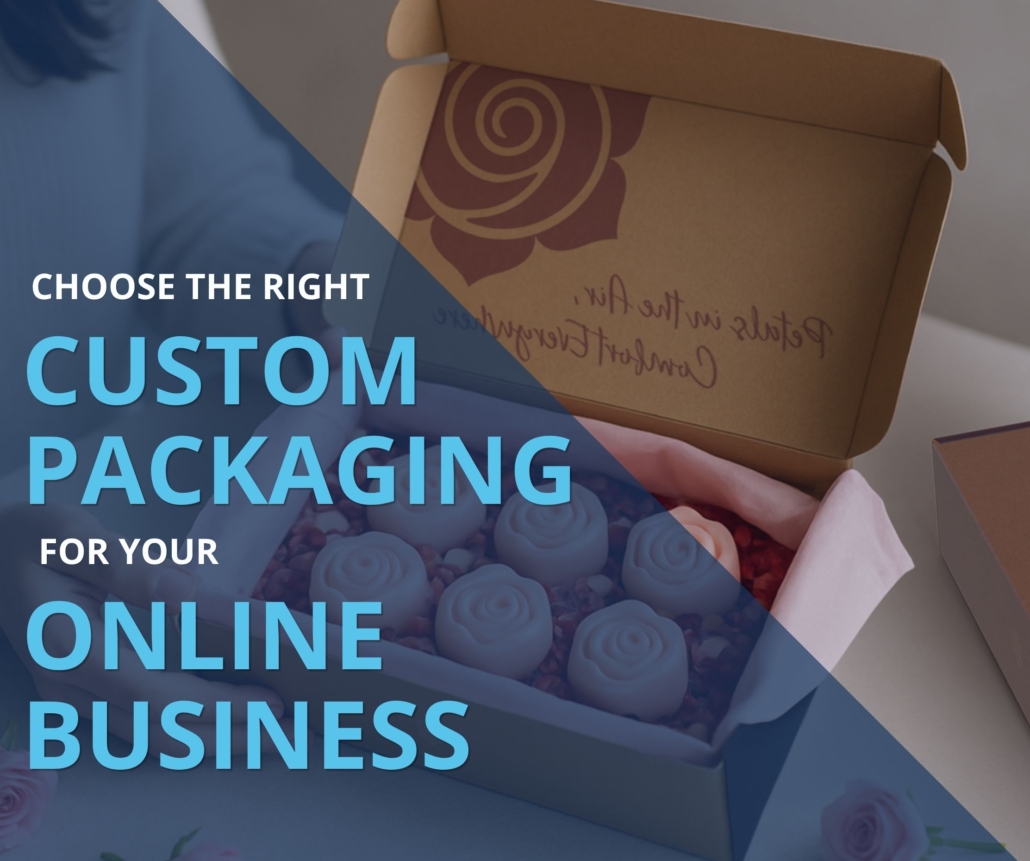
- Mailer boxes are popular for subscription boxes, gifting and apparel. They fold into a self-contained box without tape and make a strong first impression.
- Shipping boxes (regular slotted cartons) are the workhorse for heavier or bulkier goods.
- Boxes with inserts or dividers keep multiple items, or delicate products like glassware and cosmetics, secure and neatly presented.
- Sleeves and wraps add branding to a simple box, or bundle products together.
Step 4: Decide how it will be printed
Printing options range from a simple one-colour logo on the outside to full-colour designs covering inside and out. The right level depends on your brand, volume and budget.
- Outside print builds brand recognition as the parcel travels and arrives at the door.
- Inside print creates the unboxing moment: a message, pattern or discount code that only the customer sees.
- Plain boxes with branded extras such as stickers, tape or inserts can be a lower-cost way to add personality.
Keep your artwork simple and bold. Designs that rely on tiny details or very precise alignment can look worse once folded and handled.
Step 5: Plan for the unboxing experience
Social media has made unboxing part of the product. A well-presented parcel gets photographed and shared, and it makes customers more likely to buy again. Small touches go a long way:
- A thank-you note or care instructions inside the lid
- A consistent colour palette that matches your website and product
- Tissue paper or inserts that hold items neatly
- A QR code linking to a how-to video, a review request or a loyalty offer
Step 6: Think about the whole order flow
A box also has to work for the people packing it. Consider:
- Assembly time. Boxes that fold together quickly save labour as your volumes grow.
- Storage. Flat-packed boxes take up far less space than assembled ones.
- Consistency. Standard sizes make packing faster and reduce errors.
- Returns. If you have a high return rate, think about whether the box can be reused or resealed.
Step 7: Don’t forget sustainability
Customers notice excess packaging. Right-sized boxes, recyclable materials and minimal plastic all help, and they’re worth telling customers about on the box itself.
Step 8: Ask for a sample before committing
Before placing a full order, request a sample or prototype if you can. Check the fit, test how it travels, and ask your team how easy it is to pack. It’s a small step that avoids costly changes later.
Talk to us
MRP produces custom packaging for e-commerce and retail brands from our Nottingham site. Send us your product dimensions and we’ll suggest the right style, board and print finish. Get in touch.